The envelope method is one of the oldest budgeting systems around. On payday, you withdraw cash and divide it into labeled envelopes: groceries, fuel, eating out, entertainment. When an envelope is empty, that category is done until next payday.
It works beautifully for one simple reason: you can see and feel the limit. There’s no arguing with an empty envelope.
The trouble is that most of us barely use cash any more. Tap-to-pay, online shopping and subscriptions have made physical envelopes impractical. But the principle behind them is as useful as ever, and it’s easy to rebuild digitally.
Why envelopes work so well
It’s worth understanding what made the system effective, so you can keep those qualities when you go digital:
- Limits are decided in advance. You choose how much each category gets before you spend, not after.
- Progress is visible. A thinning envelope is a constant, gentle reminder.
- Overspending requires a decision. To spend more on eating out, you have to physically take money from another envelope. That makes trade-offs conscious.
- Everything resets on payday. Each cycle is a fresh start.
Rebuilding it digitally
Your categories are your envelopes
Start with the categories where your spending is flexible and tends to drift: groceries, eating out, transport, shopping, entertainment. Fixed bills like rent don’t really need envelopes, because they’re the same every month.
Budgets are how much goes in each envelope
For each category, set a monthly budget, the digital equivalent of the cash you’d put in the envelope. Base it on a month or two of real spending, not wishful thinking.
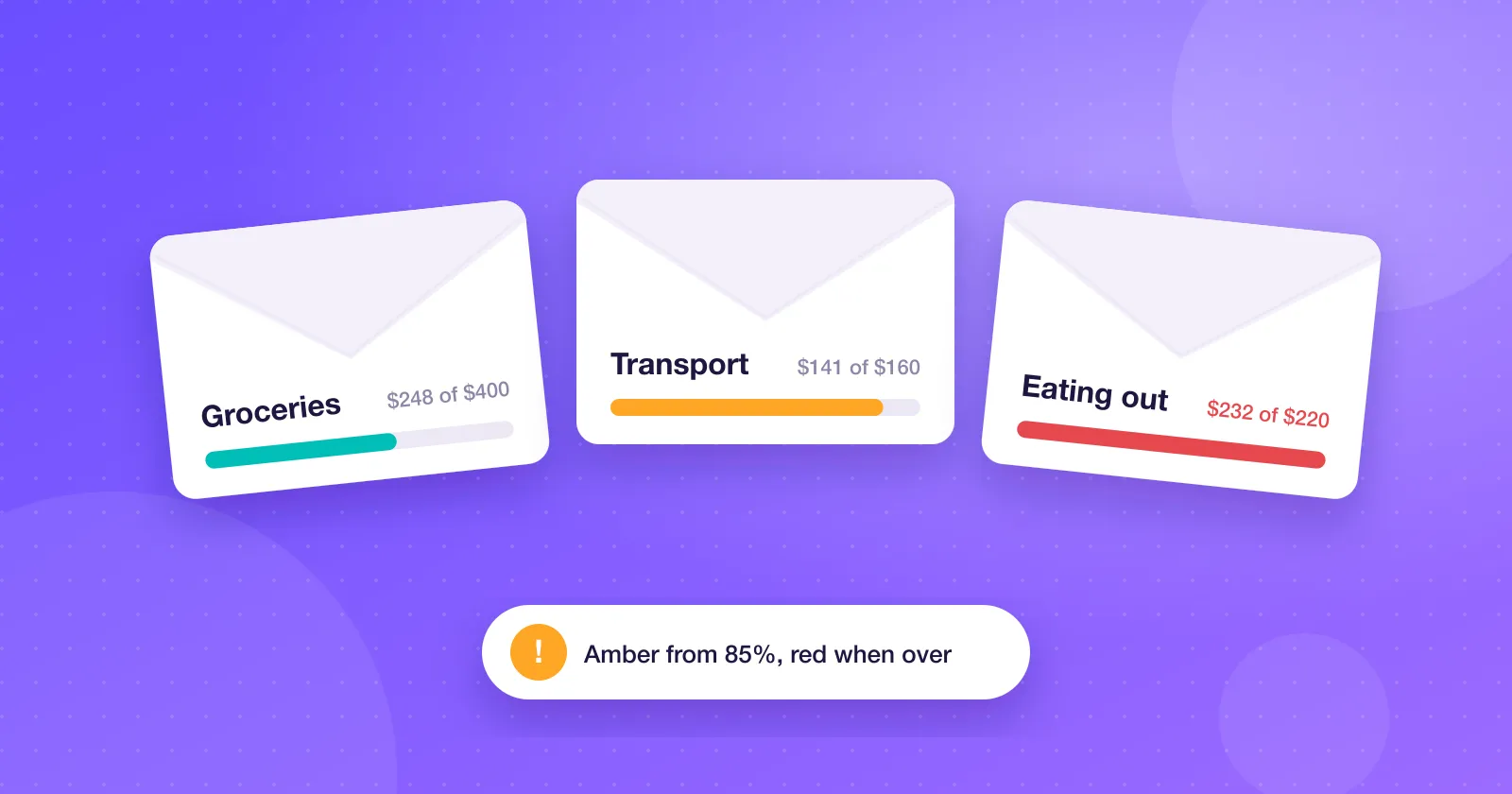
Progress bars replace the thinning stack of cash
This is where a good app matters. You want to see, at a glance, how full each envelope still is. In Expense Manager, each budget shows a progress bar and how much you have left. The bar turns amber once you pass 85%, a heads-up that the envelope is nearly empty, and red when you go over.
That color change does the job the thin envelope used to do: it catches your attention before the money’s gone.
Log every purchase as it happens
With cash, the envelope updates itself. Digitally, you need to record the spend. The faster that is, the better the system works. Three taps (plus, amount, category) is quick enough to do at the till.
Move money deliberately
When you overspend in one envelope, don’t just shrug and let it go red. Decide which other envelope will cover it, and reduce that budget for the month. That keeps the most valuable part of the envelope method: every overspend is a choice.
If a single month needs different envelope sizes, for example more for gifts in December, you can override that month’s budget without changing your usual amounts.
A hybrid option: cash for problem categories
Some people find that for one or two categories, nothing beats real cash. If eating out or weekend spending always gets away from you, try withdrawing that envelope’s amount in cash for a month and using only that. Many people find they spend less when they can see notes leaving their hand.
You can still log those cash purchases in your tracker, using a Cash account, so your reports stay complete.
Tips for making it stick
- Start with three to five envelopes, not fifteen. You can add more later.
- Leave a small “miscellaneous” envelope. Life always produces something you didn’t plan for.
- Look at your envelopes mid-month. A quick check around the halfway point gives you time to adjust.
- Don’t punish yourself for a red bar. It’s information, not a verdict. Adjust next month’s amounts if a budget was simply unrealistic.
The bottom line
The envelope method never really depended on paper envelopes. It depended on deciding limits in advance, seeing progress, and making trade-offs consciously. All three translate perfectly to a phone, and you’ll never have to hunt for a pen to label anything again.