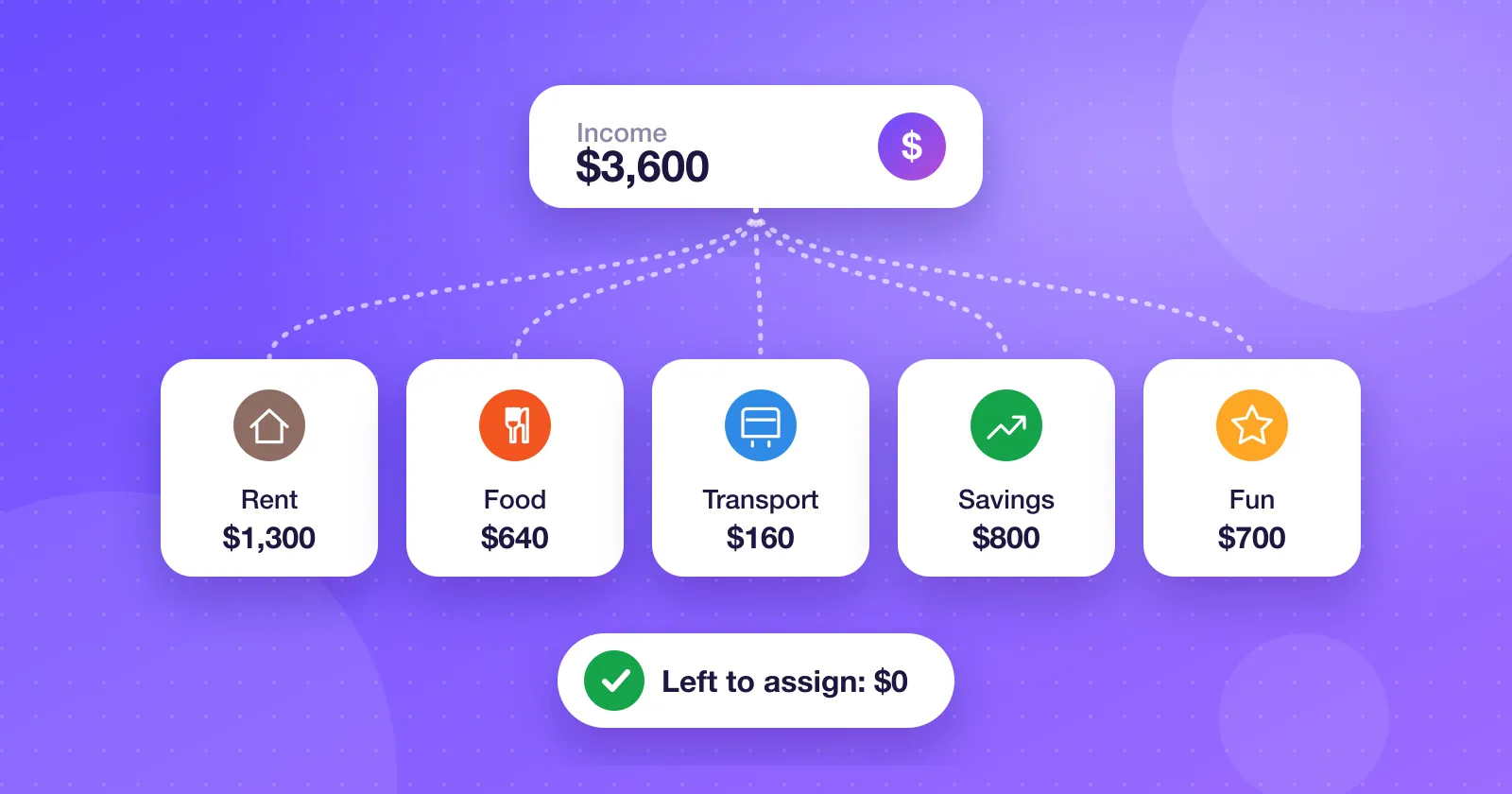
“Zero-based budgeting” sounds like something from a corporate finance textbook. The idea behind it is actually very simple: before the month starts, you give every dollar of your income a job, until there’s nothing left unassigned.
Income minus everything you’ve planned for equals zero. That’s where the name comes from.
It doesn’t mean spending everything. Savings, debt payments and a buffer all count as jobs. It just means no money is left drifting around without a purpose, because unassigned money has a habit of quietly getting spent.
How it differs from other budgets
Many budgets work by setting limits on a few categories and hoping the rest works out. Whatever is left at the end of the month, if anything, goes to savings.
Zero-based budgeting flips that. You decide up front exactly where every dollar will go, including savings. Nothing is “whatever’s left”.
Step by step
1. Start with your take-home pay for the month
Use what actually lands in your account after tax. If your income varies, use a conservative estimate: the amount you’re confident you’ll earn in a slow month.
2. List your fixed costs
These are the bills that are roughly the same every month: rent or mortgage, utilities, phone, insurance, loan minimums, subscriptions.
3. Add your variable essentials
Groceries, fuel or transit, household basics. Look at the last month or two of spending to get realistic numbers.
4. Assign savings and debt goals
Emergency fund, retirement contributions, extra debt payments, a sinking fund for a holiday or next year’s car insurance. Give each a specific amount.
5. Assign the rest to wants
Eating out, entertainment, hobbies, shopping. Be honest here. A budget that pretends you’ll never buy coffee is a budget you’ll abandon.
6. Adjust until it hits zero
If your plan adds up to more than your income, cut from wants first, then look at variable essentials. If it adds up to less, you have unassigned money. Give it a job, often extra savings or debt payments.
A worked example
Say your take-home pay is $3,600 this month.
| Job | Amount |
|---|---|
| Rent | $1,300 |
| Utilities & internet | $180 |
| Phone | $45 |
| Insurance | $120 |
| Groceries | $420 |
| Transport | $160 |
| Emergency fund | $300 |
| Extra loan payment | $150 |
| Holiday fund | $100 |
| Eating out | $220 |
| Entertainment & hobbies | $140 |
| Personal & shopping | $200 |
| Small buffer | $65 |
| Total | $3,400 |
That leaves $200 unassigned. In a zero-based budget, that $200 needs a job: maybe another $100 to the emergency fund and $100 to the loan. Now income minus plan equals zero.
During the month: move money, don’t break the budget
Here’s what makes zero-based budgeting work in practice: when you overspend in one category, you move money from another category to cover it. Overspent on groceries by $30? Take $30 from eating out.
The total never changes. You’re just making trade-offs visible. That’s the real value of the method: every overspend becomes a conscious choice rather than a surprise at the end of the month.
Common mistakes
- Forgetting irregular expenses. Car maintenance, gifts, annual subscriptions, medical costs. Divide the yearly total by twelve and budget for it monthly.
- No buffer. Leave a small unassigned-but-planned buffer for the things you didn’t think of.
- Budgeting too tight too soon. Your first zero-based budget will be wrong. Adjust it after a month of real data.
- Treating it as a one-off. You rebuild the plan every month, which gets faster each time.
Doing it with Expense Manager
You can run a zero-based-style budget in Expense Manager by setting a monthly budget for each spending category and an overall budget equal to your spending total. Budgets repeat every period, and you can override a single month without changing the rest. That’s handy when December needs more for gifts, or a month has an unusual bill.
As you log spending, budget bars show where you stand in each category. When one goes amber or red, you know it’s time to move money from somewhere else.
Is it right for you?
Zero-based budgeting takes more planning than looser methods, but many people find it gives them something the others don’t: a sense of control. Every dollar has a purpose, and you chose it. If you’ve ever reached the end of the month wondering where it all went, it’s well worth a try.